Demonstration 1
A coloring sheet in minutes
Many teachers and librarians make coloring sheets for their classes. A clear request names the age, the scene and the style.
Create a simple black and white coloring page for children ages 7 to 11: a hummingbird visiting tall flowers in a mountain garden. Thick, clean outlines, no shading, white background, plenty of open space to color.
Tap a part to see where it sits in the request.
Sample page, drawn ahead of time as a backup if the tool is slow.
Why it mattersA clear request and a teacher's review make AI a quick creative helper, and the spot the mistake version teaches children that AI can be wrong.
Who it servesTeachers and librarians preparing class materials, and children learning to question what AI makes.
Demonstration 2
One story, three reading levels
One passage, adapted so every child in the room can read the same story. The teacher still reads each version and adjusts a word or two.
See the request
Why it mattersEvery child reads the same story at their own level, so the whole class can talk about it together. The teacher chooses each level.
Who it servesTeachers with mixed reading levels, children reading below or above grade level, and families who read another language at home.
Demonstration 3 · Creative arts
A child's own drawing, brought to life
From The Little Studio, the LH Digital creative series for children. A hand-drawn creature becomes a short animation, and the lesson is about how computers see.
- Draw. A child draws a creature on plain paper in thick, dark lines.
- Photograph. A grown-up takes a clear photo from straight above.
- Animate. The Little Studio animator turns the photo into a short moving clip.
- Wonder. Ask: how did the computer decide which parts should move?
The Little Studio animator, built and owned by LH Digital. In a session, an adult runs it on the classroom screen.
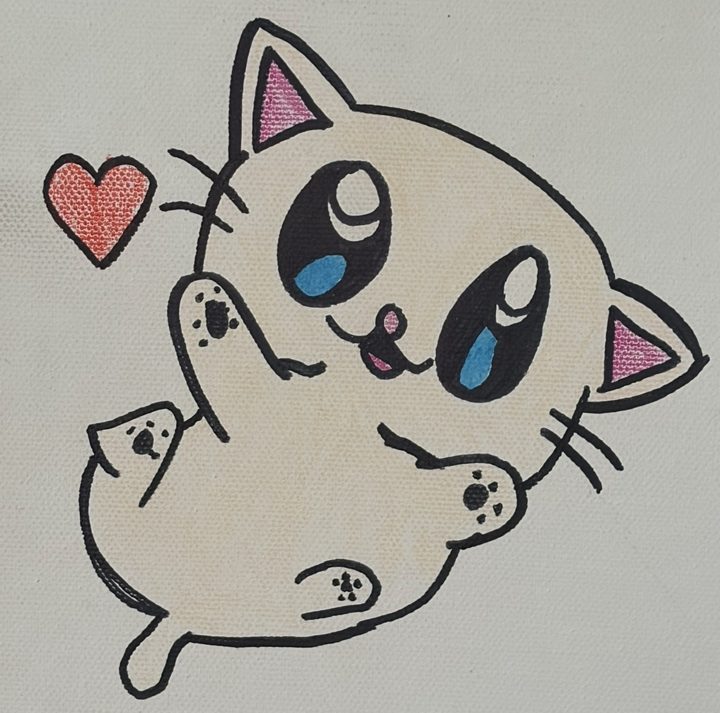
Our animator keeps no copy of the picture and removes location details from photos. The picture is sent to an outside service to make the animation, so a grown-up runs it and no names go on the page.
Why it mattersThe child's own art stays at the center. The screen is used briefly, by an adult, and it shows the first of the Five Big Ideas in AI: computers perceive the world using sensors.
Who it servesArt and classroom teachers, and children who learn best by making.
Kindergarten and 1st grade
For the youngest learners, the goal is less screen time. AI stays in the teacher's hands, for planning and preparation, while children learn through stories, play and conversation.
From school to home
The adult prepares, the child works on paper
“I think a key part of using AI as a student is using it as a tool … creating things like flashcards based off your notes … sort of helping you be more efficient at a particular task.” Colorado student, Colorado Roadmap for AI in K-12 Education, page 11
Why it mattersAI stays in the adult's hands and the learning stays on the page, so home practice adds no screen time.
Who it servesFamilies supporting practice at home, and teachers who want to share one simple approach with parents.
For your school
Bring this session to your faculty.
We shape it around your staff's questions, your grade levels and what your district already requires. A conversation comes first.
Ways to go deeper
- Colorado Roadmap for AI in K-12 EducationColorado Education Initiative with the Colorado Department of Education, August 2024
- Future Ready Colorado: AI K-12 Skills Progression GuideAI skills mapped grade by grade, with elementary activities. Colorado Education Initiative, August 2025
- If and How ChecklistA teacher's guide to whether and how to use an AI tool in a lesson
- AI Resource Evaluation ToolCriteria for a school reviewing a tool before approving it
- AI4K12: Five Big Ideas in AIWhat every K-12 student should know about AI, organized by grade band
- TeachAI principles for AI in educationDiscussion questions and district examples for each principle
- Colorado Department of Education AI resourcesThe state's collected guidance, curricula and training links